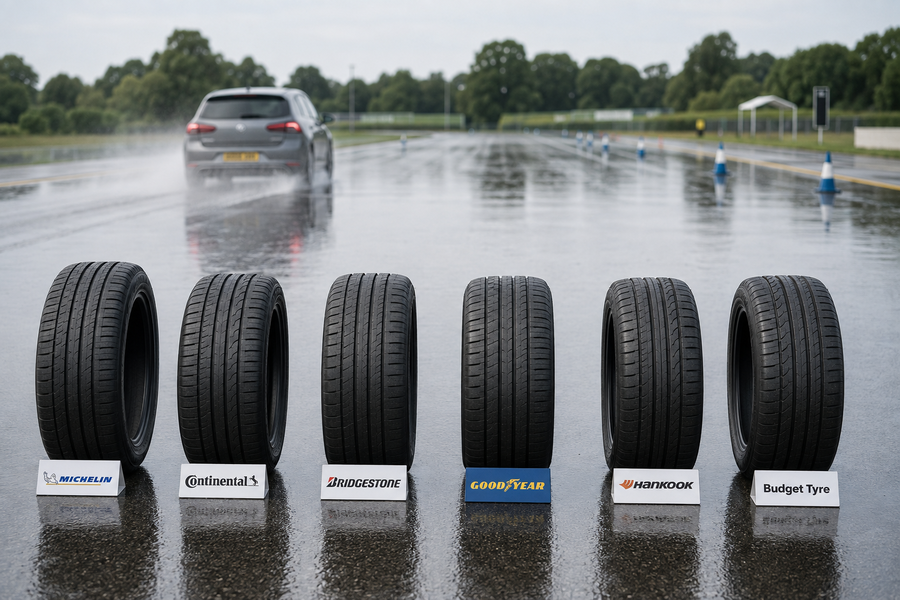

Michael Welch is preparing to return to Europe with a tyre brand built partly on the proposition that motorists need not accept the traditional price gap attached to established premium names. Independent testing suggests that argument deserves examination, but not an easy endorsement. Cheaper tyres are closing some performance gaps while remaining substantially behind in others, particularly longevity and all-round capability.
A man who built one of Europe’s best-known online tyre retailers by selling established manufacturers’ products is now making a bet against part of the hierarchy that helped create that market.
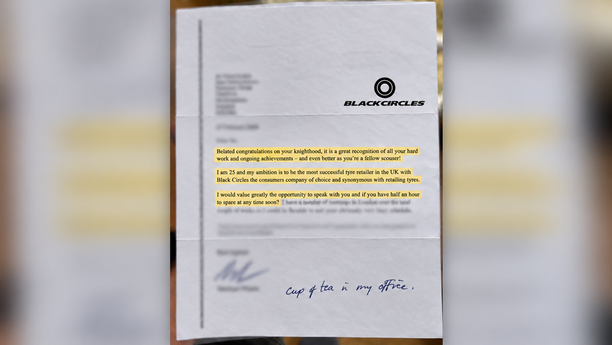
Michael Welch, founder of Blackcircles.com, plans to launch Rolo Tires in six European countries in the first quarter of 2027. The company is positioning itself as a premium tyre brand with a direct-to-consumer focus, arguing that changes in tyre quality, information and market economics have made traditional price gaps increasingly difficult to justify. Tyre News Media reported Rolo’s European launch plans in May.
A recent Financial Times profile has put Welch back in the wider business spotlight, revisiting the entrepreneur’s journey from teenage tyre fitter to the £50mn sale of Blackcircles to Michelin in 2015 and his subsequent automotive ventures. Yet the commercially important question for the tyre trade is not Welch’s entrepreneurial history. It is whether the market proposition behind his latest venture stands up.
Rolo has argued that the quality gap between entry-level tyres and established premium brands has narrowed significantly. That is a consequential claim for manufacturers, wholesalers and retailers because premium pricing depends on customers believing that spending more delivers something meaningful in return.
Independent tyre testing suggests the answer is becoming more complicated.
The 2025 Auto Bild summer tyre test in 225/40 R18 provides a useful example. Its final test field included products from established premium manufacturers alongside Korean, Chinese and other international competitors, with braking, handling, aquaplaning, rolling resistance, comfort and projected wear among the assessed characteristics.
Some of the results challenge conventional assumptions about lower-priced products. Auto Bild reported that Sailun and Linglong demonstrated competitive driving characteristics, with the publication noting that Chinese manufacturers were continuing to close the performance gap. In individual grip disciplines, an unfamiliar or lower-priced badge was no longer necessarily synonymous with poor performance.
But the same test demonstrates why comparing tyres on one headline measurement can be misleading.
Goodyear’s Eagle F1 Asymmetric 6 achieved a projected tread life of 54,020km, while the Linglong Sport Master was projected at 22,570km. Tyre Reviews’ analysis of the Auto Bild data concluded that the strong grip performance of the Chinese contenders came with substantially poorer tread life, resulting in much less favourable cost per 1,000km despite lower acquisition prices.
That distinction matters commercially. A tyre capable of approaching premium braking performance is not necessarily equivalent to a premium tyre if it cannot combine that capability with mileage, efficiency, aquaplaning resistance and consistent performance across the wider test programme.
It also exposes a weakness in the way the industry frequently discusses price. Purchase price and tyre value are not interchangeable.
A cheaper tyre that requires replacement much earlier can cost more over its usable life. Conversely, a competitively priced mid-market product capable of combining strong test performance with acceptable longevity can undermine the assumption that an established premium badge automatically represents the strongest value.
The hierarchy is therefore becoming less predictable rather than simply disappearing.
The evidence becomes considerably less ambiguous under demanding winter conditions.
ADAC’s 2025 winter tyre test was the largest in the organisation’s history, assessing 31 products in 225/40 R18 across premium, mid-priced and budget segments. Six tyres received an overall “good” assessment, and all six were premium products. Eleven tyres were rated inadequate, all from the entry-level segment.
The differences were not cosmetic. ADAC reported a gap of more than 15 metres between the best and worst wet-braking performers from 80km/h. When the vehicle fitted with the best wet-braking tyre had stopped, the car using the poorest performer was still travelling at almost 46km/h.
The strongest premium products also demonstrated why all-round performance remains difficult to replicate. Goodyear’s UltraGrip Performance 3 won the test while combining strong wet performance with a projected lifespan exceeding 76,000km. Michelin, Bridgestone, Dunlop, Hankook and Continental completed the group receiving ADAC’s “good” classification.
This does not establish that every premium tyre is worth its price, nor that every lower-priced tyre represents a compromise too far. ADAC itself identified acceptable alternatives outside the premium group. It does demonstrate that the strongest evidence currently available does not support a broad conclusion that the quality gap has disappeared.
Instead, premium manufacturers appear to retain an important advantage in balance: the ability to perform strongly across multiple, sometimes conflicting requirements rather than optimising one or two headline characteristics.
The traditional premium, quality and budget labels remain convenient commercial shorthand, but they increasingly conceal substantial variation within each tier.
That is particularly relevant as Chinese tyre manufacturers become larger, more technologically capable and more internationally focused. Tyre News Media recently examined whether the traditional definition of a budget tyre is becoming outdated, as manufacturers expand overseas production, invest in technology and seek higher-value positions in European markets.
Sailun offers one example. Its European strategy increasingly emphasises technology and performance rather than simply acquisition price, including the EcoPoint3 liquid-phase mixing technology highlighted at The Tire Cologne this year. That does not automatically make its products equivalent to established premium competitors, but it illustrates why country of origin or historic market positioning is becoming a less reliable shortcut for predicting capability.
At the same time, premium brand value remains formidable. Michelin retained first place in Brand Finance’s 2026 tyre ranking with a reported brand value of US$10.3bn, while Bridgestone and Continental remained among the leading global names. The strength of those brands reflects decades of product development, OE relationships, marketing, distribution and accumulated consumer confidence, rather than tyre-test results alone.
The commercial challenge is demonstrating how much of that value translates into benefits the replacement customer can identify and is willing to pay for.
For tyre retailers, this changing market could prove as important as it is for manufacturers.
Online price transparency already makes it simple for motorists to compare dozens of tyres in the same size. EU labels add standardised information, while independent tests and specialist reviews provide considerably more product information than was readily available when Blackcircles emerged in the early days of online tyre retail.
Greater information does not necessarily commoditise tyres. It can instead expose how complicated choosing one has become.
A product might deliver excellent wet braking but mediocre mileage. Another could carry a substantial purchase premium yet produce lower whole-life costs. A mid-market tyre may outperform a more expensive competitor in several disciplines without matching its all-round capability.
That changes the retailer’s opportunity. Rather than relying predominantly on the hierarchy of familiar brands, dealers can add value by explaining the trade-offs between safety, mileage, efficiency, performance and purchase price for the individual customer.
For fleets, the argument becomes even more economic. Acquisition cost is only one component of tyre expenditure, making mileage, rolling resistance, reliability and replacement frequency potentially more consequential than the price printed on the invoice.
Rolo makes this debate timely, but it does not yet resolve it.
The company intends to launch initially in France, Germany, Italy, Poland, Spain and the UK, offering summer and all-season products before a planned North American expansion in 2028. It is also recruiting country managers as it establishes its European operation.
Until its tyres reach independent testing, however, there is no external performance evidence with which to judge whether Rolo itself can deliver premium capability at the price position it eventually adopts. Publicly available launch information establishes the commercial proposition, not its technical outcome.
That distinction is important.
Welch’s argument should therefore be treated as a testable hypothesis about the replacement tyre market rather than evidence that the established hierarchy has already been overturned.
What existing evidence does suggest is that the hierarchy is becoming more nuanced. Lower-priced manufacturers can challenge premium competitors in individual disciplines, while capable mid-market products can make the relationship between price and performance surprisingly weak in some comparisons. At the other end of the spectrum, demanding tests continue to reveal substantial safety and longevity differences, particularly among the cheapest products.
The question facing the tyre industry may therefore no longer be whether premium tyres are universally worth paying more for.
It is which tyres are worth paying more for, what the additional money actually buys, and whether manufacturers and retailers can prove that value to increasingly well-informed customers.
Tags: premium tyres, budget tyres, premium vs budget tyres, tyre testing, tyre performance, tyre value, tyre prices, Rolo Tires, Michael Welch, Chinese tyre brands, tyre retail
Editorial Standards & Disclaimer
Tyre News Media is an independent industry publication. Our reporting is based on information available at the time of publication, including company announcements, regulatory filings, official data, research and other sources considered reliable.
Articles may include independent analysis and editorial interpretation. Where appropriate, company statements and third-party claims are attributed to their source. Analysis, estimates and forward-looking observations should not be read as statements of established fact.
Tyre News Media takes reasonable steps to ensure accuracy but welcomes corrections, clarifications and responses from organisations or individuals covered in our reporting. If you believe information is inaccurate or requires clarification, please contact info@tyrenews.co.uk. Material errors will be corrected as appropriate.
Commercial relationships, advertising and sponsorship do not determine Tyre News Media's editorial coverage or conclusions.