


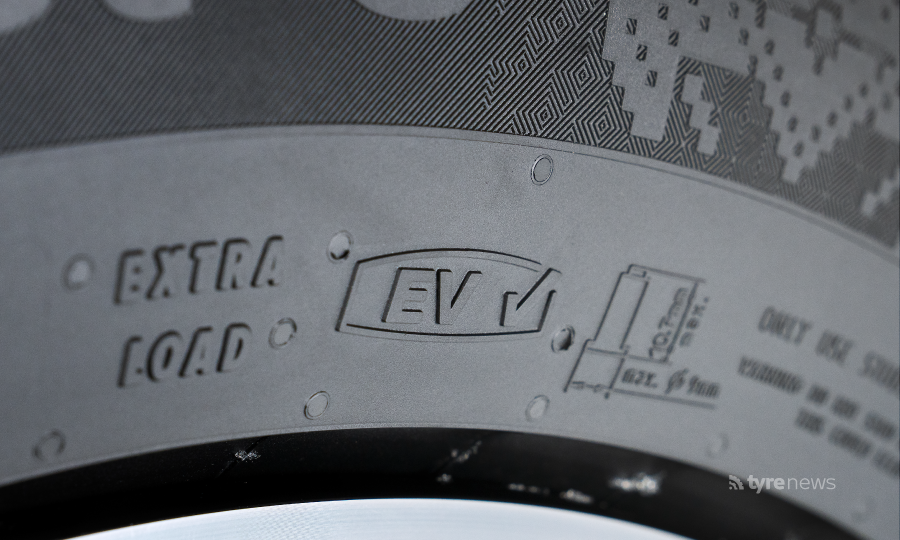

Continental Tyres has cemented its position as the leading original equipment (OE) tyre supplier to electric vehicle manufacturers, confirming that all 10 of the highest-volume EV producers in the Europe, Middle East and Africa (EMEA) region specified Continental tyres as factory fitments during 2025.
The milestone is a significant marker of the German tyre maker's long-term investment in electric mobility. It extends well beyond a single region: globally, 17 of the 20 highest-volume electric vehicle manufacturers now rely on Continental as their OE tyre partner. The company's customers span both premium and volume segments, including BYD, Volkswagen, Stellantis, BMW, NIO, Hyundai and Renault.
Outside EMEA, Continental supplies 8 of the 10 leading EV manufacturers in the Americas. In the Asia-Pacific (APAC) region, which remains the world's fastest-growing EV market, it supplies 7 of the top 10. The Chinese market in particular is evolving rapidly, with new high-volume producers entering the rankings within a single year, adding complexity to any tyre manufacturer's OE strategy.
The results reflect a strategic decision Continental made long before electric vehicles became mainstream. The company identified the specific demands that battery-powered cars place on tyres and began optimising its passenger tyre range accordingly.
Dennis Bellmund, who leads the global original equipment business at Continental Tyres, explains the rationale: "The EMEA region confirms the success of our strategy. We began designing our passenger tires for low rolling resistance, quiet rolling noise and high load capacity very early on. These properties are especially important for electric vehicles."
Electric vehicles are generally heavier than their internal combustion equivalents, owing to the weight of their battery packs. They also deliver instant torque on acceleration, which places greater demands on the tyre compound and structure. Together, higher load and sharper torque can accelerate tyre wear. At the same time, because EVs produce far less engine noise, tyre rolling noise becomes considerably more noticeable to occupants and pedestrians alike.
Continental's response has been to pursue continuous improvements in rolling resistance, noise reduction, and mileage across its passenger tyre portfolio, irrespective of the vehicle's drivetrain.
Continental's commitment to energy-efficient tyre design predates the modern EV era by some margin. The company introduced its first tyre line built explicitly around energy efficiency in 1993, the ContiEcoContact, and has iterated through seven generations since. The latest, the EcoContact 7, is now available on the market.
The EcoContact 7 incorporates optimised aerodynamics as a core performance attribute. Continental's engineers adopted a structure inspired by the dimpled surface of a golf ball, a feature the company calls the "aerodimple." Dimples in the tyre's sidewalls reduce air turbulence as the wheel rotates, which lowers aerodynamic drag and reduces the energy required to keep the tyre moving. The result is improved energy efficiency that benefits both electric vehicles and conventional combustion-engine cars.
The commercial opportunity underpinning Continental's OE strategy is substantial. According to the Fraunhofer Institute for Systems and Innovation Research (ISI), global battery electric vehicle (BEV) sales grew by approximately 23 per cent in 2025, rising from 10.3 million units in 2024 to an estimated 12.7 million.
China remains the dominant single market for electric cars, posting double-digit growth rates. Europe is the second-largest EV market worldwide, with approximately 2.5 million new electric vehicles registered in 2025, representing a rise of around 26 per cent compared with the prior year. North American registrations held steady at around 1.4 million vehicles.
The numbers demonstrate why winning OE positions with the world's highest-volume EV producers is commercially critical for any tyre manufacturer. Factory fitments are not only a direct revenue stream but also influence replacement purchases throughout the life of the vehicle, as many drivers retain the brand specified at the point of sale.
This latest announcement builds on a consistent pattern of Continental's EV-focused OE activity. Earlier this year, TyreNews.co.uk reported that Ford's new electric SUVs would be factory-fitted with Continental tyres, including the EcoContact 6 Q summer tyre and the AllSeasonContact for year-round use. The Continental SportContact 7 was also confirmed as the OE fitment for the Polestar 3, with ContiSilent technology specified to meet the low-noise requirements of the premium electric SUV.
For broader context on how the tyre industry is responding to EV-specific demands, see our feature on how manufacturers are reducing the environmental impact of EV tyres, which covers rolling resistance innovations, noise reduction technologies and sustainable materials across the sector.
Continental's OE leadership sits within a wider corporate transformation. As previously reported, the company is restructuring to become a dedicated tyre manufacturer, spinning off its Automotive division as Aumovio and divesting ContiTech to sharpen its focus on the global tyre market.
Tagged with: Continental Tyres, OE tyres, electric vehicle tyres, EV original equipment, EcoContact 7, rolling resistance, e-mobility, EMEA tyre market, low rolling noise, tyre innovation, passenger car tyres, sustainable tyres
Editorial Standards & Disclaimer
Tyre News Media is an independent industry publication. Our reporting is based on information available at the time of publication, including company announcements, regulatory filings, official data, research and other sources considered reliable.
Articles may include independent analysis and editorial interpretation. Where appropriate, company statements and third-party claims are attributed to their source. Analysis, estimates and forward-looking observations should not be read as statements of established fact.
Tyre News Media takes reasonable steps to ensure accuracy but welcomes corrections, clarifications and responses from organisations or individuals covered in our reporting. If you believe information is inaccurate or requires clarification, please contact info@tyrenews.co.uk. Material errors will be corrected as appropriate.
Commercial relationships, advertising and sponsorship do not determine Tyre News Media's editorial coverage or conclusions.
_0%20(1).png)










.png)
%20(1).jpg)
.jpeg)
.png)

%20(1).jpeg)
%20(1).jpeg)