
Giti Tire says forthcoming Euro 7 tyre abrasion requirements validate rather than disrupt its existing research strategy, as European regulation begins placing measurable limits on tyre wear. The change matters because manufacturers will increasingly have to demonstrate that lower material loss can be achieved alongside wet grip, rolling resistance, durability and the other performance characteristics demanded by vehicle manufacturers and motorists.
For decades, tyre development has involved managing competing requirements. Improving one characteristic can influence another, forcing engineers to balance grip, rolling resistance, wear, noise, comfort and handling rather than optimise any single measure in isolation.
Euro 7 adds another constraint to that equation.
Regulation (EU) 2024/1257 expands European vehicle emissions regulation beyond the exhaust pipe to include non-exhaust emissions such as brake wear and tyre abrasion. Passenger-car tyre abrasion limits are scheduled to apply to new C1 tyre types from 1 July 2028, followed by C2 light-commercial tyres from April 2030 and C3 heavy-duty tyres from April 2032.
That timetable means abrasion performance is moving from an environmental research subject towards a measurable product-development and compliance requirement.
Giti argues that the shift broadly supports the engineering philosophy it already follows. Its development work combines tread design, compound formulation and manufacturing consistency, with engineers seeking to reduce material loss without compromising wet-weather safety, rolling efficiency, comfort or service life.
The important distinction is that Euro 7 will increasingly make that balance externally measurable. Manufacturers will not simply be able to describe durability or reduced environmental impact as product attributes; qualifying tyres will ultimately have to perform within defined abrasion thresholds under harmonised procedures.
This creates a more complicated optimisation problem for tyre developers.
A tyre engineered solely to minimise wear would be of little commercial value if the changes required damaged wet braking, handling or other safety characteristics. Equally, extending tyre life while increasing rolling resistance could work against vehicle efficiency and, for electric vehicles, driving range.
The competitive question therefore becomes less about which manufacturer can produce the hardest-wearing tyre and more about which can reduce abrasion while preserving performance across the rest of the tyre's operating envelope.
Giti says its research is concentrating on advanced compound development, tread-pattern optimisation, lower rolling resistance, longer service life and tighter manufacturing controls.
There is already evidence of that broader efficiency strategy in its commercial portfolio. The company recently introduced its A-rated Ecoroad truck tyre range, using silica-based tread technology intended to reduce hysteresis, heat generation and energy loss.
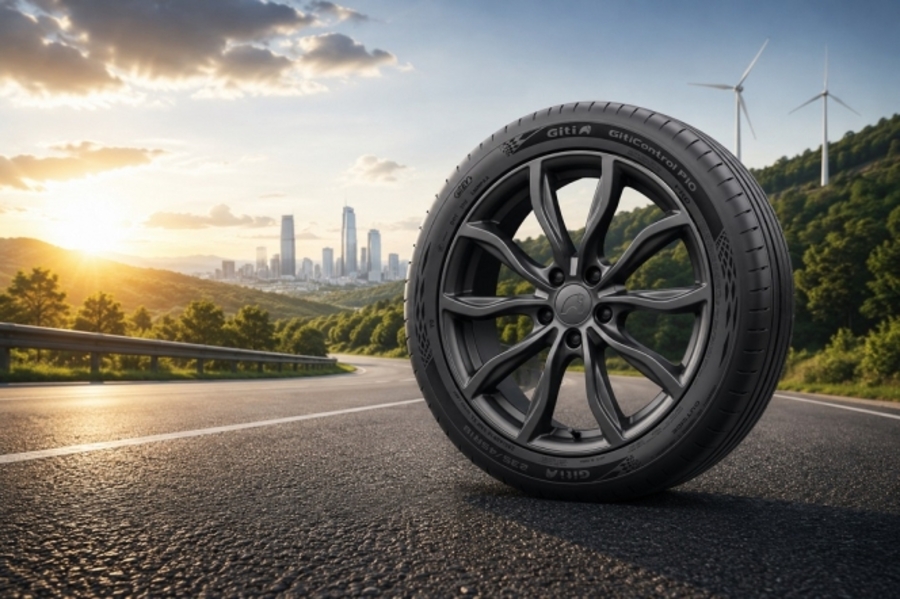
Its passenger-car products similarly illustrate the multi-objective development challenge. Giti's GitiSynergyE2, for example, combines a low-energy compound with design measures targeting rolling resistance, wet performance, wear and comfort.
Euro 7 is also likely to influence how manufacturers develop tyres, not simply what materials they use.
Tyre News Media recently reported on the Fraunhofer TERIS tyre abrasion research programme, which is developing laboratory techniques to generate, collect and analyse tyre abrasion under controlled conditions. The potential commercial value lies in allowing manufacturers to identify promising compounds and understand wear mechanisms earlier in the development process before committing to more expensive complete-tyre testing.
That capability could become increasingly valuable as abrasion joins the established matrix of performance targets.
The regulatory challenge is particularly relevant because wear varies according to more than compound chemistry. Vehicle mass, torque, road surface, driving behaviour, tyre pressure and operating conditions can all influence material loss. Establishing repeatable testing therefore gives manufacturers a common benchmark against which engineering improvements can be demonstrated.
Recent Joint Research Centre work also illustrates why the regulatory programme will develop in stages. Its research into C2 van tyres found that these vehicles can generate substantially more tyre wear emissions per vehicle than passenger cars because of higher annual mileage and demanding operating cycles, while equivalent standardised testing for this category remains less mature.
For Giti, its original-equipment relationships provide another dimension to the issue. Supplying tyres for vehicle manufacturers already requires development against detailed targets covering characteristics such as rolling resistance, noise, durability and dynamic behaviour.
Euro 7 effectively adds abrasion to that engineering scorecard.
That may favour manufacturers with established R&D infrastructure and the ability to model interactions between compounds, tyre construction and vehicle characteristics. It could also increase the importance of manufacturing consistency: achieving a strong abrasion result during development is different from reproducing that performance reliably across high-volume production.
The wider commercial implication is that durability and abrasion resistance are likely to become more visible differentiators across the tyre market.
Tyre News Media has previously examined how tyre wear is moving under greater European regulatory scrutiny. The direction of travel is now clearer. As limits take effect, abrasion will progressively move from sustainability discussions into product homologation, procurement decisions and potentially consumer-facing comparisons.
For manufacturers, that raises the value of research capable of proving improvements rather than simply supporting environmental claims.
Giti's position that Euro 7 validates its existing development direction is credible in one important respect: tyre engineering was already moving towards longer life, lower energy consumption and increasingly sophisticated compound technology before abrasion became a regulated parameter.
But regulatory compliance will ultimately be determined by measured performance rather than development philosophy.
The next two years will therefore provide a clearer indication of which manufacturers have genuinely incorporated abrasion into their tyre platforms and which need more substantial product changes before the first C1 requirements arrive in July 2028.
For tyre manufacturers, OE customers and the replacement market, Euro 7 represents more than another environmental standard. It begins to redefine durability as both a customer benefit and a regulated emissions characteristic.
Tagged with: Giti Tire, Euro 7, tyre abrasion, tyre wear emissions, tyre compounds, rolling resistance, sustainable tyres, microplastic pollution, original equipment tyres, tyre testing, manufacturing quality, tyre durability
Editorial Standards & Disclaimer
Tyre News Media is an independent industry publication. Our reporting is based on information available at the time of publication, including company announcements, regulatory filings, official data, research and other sources considered reliable.
Articles may include independent analysis and editorial interpretation. Where appropriate, company statements and third-party claims are attributed to their source. Analysis, estimates and forward-looking observations should not be read as statements of established fact.
Tyre News Media takes reasonable steps to ensure accuracy but welcomes corrections, clarifications and responses from organisations or individuals covered in our reporting. If you believe information is inaccurate or requires clarification, please contact info@tyrenews.co.uk. Material errors will be corrected as appropriate.
Commercial relationships, advertising and sponsorship do not determine Tyre News Media's editorial coverage or conclusions.


_0%20(1).png)













.png)
%20(1).jpg)
.jpeg)
.png)
%20(1).jpeg)
%20(1).jpeg)