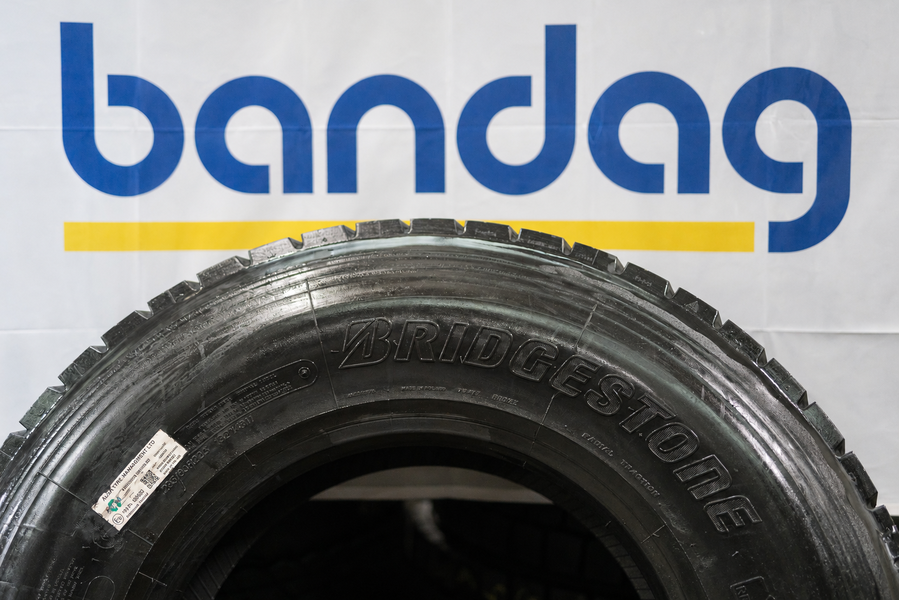

Bandag says growing cost and sustainability pressures are strengthening the case for commercial tyre retreading in 2026. Behind the Bridgestone brand’s renewed European push lies a more important question for fleets: whether preserving a premium casing through multiple working lives can produce a lower total cost than repeatedly replacing tyres with new products.
The economics of commercial tyres are increasingly difficult to judge from the invoice for the first tyre alone. Mileage, rolling resistance, premature removals, maintenance, downtime and the ability to reuse a casing can all change what a fleet ultimately pays for each kilometre travelled. Bandag’s claim of stronger momentum therefore arrives as tyre suppliers increasingly compete around whole-life operating cost rather than simply the price and performance of the original tyre.
That development was visible at Road Transport Expo this summer. As Tyre News Media reported from RTX 2026, manufacturers were increasingly connecting truck tyres with data, retreading, casing utilisation and total cost of ownership. Bridgestone demonstrated a TCO calculator allowing operators to enter their own operational data, alongside Bandag retreads, Fleetcare and Webfleet.
For fleets, the important question is not simply whether a retread costs less than another new tyre. It is how many economically productive kilometres can be extracted from the casing bought with the original tyre, and what must happen during its first life to preserve that value.
Bandag says its retreads can reduce cost per kilometre by an average of 30% compared with a new tyre. That figure should be treated as a supplier claim rather than an industry benchmark: Bandag states that it is based on internal field evaluations and testing conducted through Bridgestone's research and development facilities.
The underlying economics nevertheless warrant attention. A premium truck tyre carrying a higher initial price could ultimately prove less expensive than a cheaper alternative if its casing survives long enough to provide another productive life at an attractive cost per kilometre. Equally, that advantage can deteriorate if the casing is damaged, rejected for retreading or produces insufficient mileage during its subsequent life.
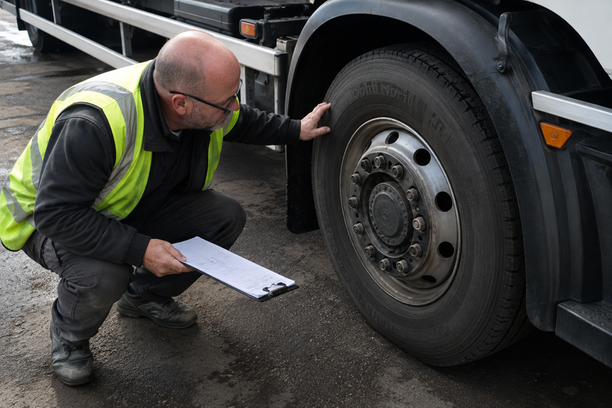
This means some of the economics of retreading are determined before a casing reaches the retread plant. Inflation management, wheel alignment, inspections, removal policies and damage prevention influence not only first-life tyre performance but potentially the residual value available to the fleet afterwards.
That changes the role of tyre maintenance. Preserving a retreadable casing becomes an asset-management issue rather than simply good workshop practice.
The point is particularly relevant because retreading is not universally suitable. Duty cycle, tyre history, casing condition, maintenance standards and damage exposure vary significantly between applications. A credible comparison between premium multi-life and lower-cost new-tyre strategies therefore requires fleet-specific data rather than a general percentage saving.
Bandag is putting greater emphasis on tracking that asset through its lifecycle. BASys assigns identification to casings and records their progress through collection, retreading and refitment, giving operators and service providers greater visibility over casing movements.
That capability formed part of Bandag's agreement with Alba Tyre Management earlier this year. The Scottish retreader joined the network as a Cornerstone Franchisee, with new equipment expected to increase its manufacturing capacity by at least 2,000 retread tyres annually in the initial phase. Tyre News Media's coverage of the Alba expansion examined how BASys could provide clearer casing histories and support decisions over whether a tyre should be retreaded, repaired or retired.
The commercial opportunity for fleets is potentially larger than tracking tyres through a factory. Better casing records could help operators establish where casing value is being lost and whether particular vehicles, routes, maintenance practices or removal decisions are reducing retread yield.
That is also where connected tyre technology and retreading begin to overlap. Monitoring pressure and condition is normally justified through safety, mileage, fuel consumption and breakdown prevention. If those systems also increase the proportion of casings capable of entering another life, part of their economic value may lie in protecting the tyre asset that remains after its original tread has been consumed.
European policy provides a separate reason for the tyre industry to pay closer attention. It should not be confused with Bandag's commercial strategy, but regulators are examining measures relevant to tyre longevity and circularity.
BIPAVER's June 2026 General Assembly discussed C3 retread tyre labelling, implementation of UN Regulation No. 172, the EU Taxonomy and the Ecodesign for Sustainable Products Regulation. Two days earlier, the association participated in an ESPR stakeholder meeting where subjects included design for recycling, digital product information and options intended to strengthen tyre retreading.
Tyre News Media has previously examined BIPAVER's case for stronger recognition of retreads in European circular-economy policy. The direction is relevant, but the regulatory outcome remains under development. It would therefore be premature to conclude that European policy has already created a decisive economic advantage for retreadable tyres.
What is clearer is that tyre lifecycle performance is attracting attention from several directions at once. Fleets are being encouraged to measure whole-life operating costs, suppliers are investing in casing management and retreading capacity, while policymakers are considering how durability, circularity and retreading should fit into future tyre rules.
The missing evidence is comparable fleet operating data. A meaningful assessment needs the price of the original tyre and retread, mileage from each life, casing acceptance rate, premature removal rate, maintenance costs and any measurable fuel or downtime differences. Residual casing value should also be included where it belongs to the operator.
There is already evidence that multi-life policies can form part of structured fleet tyre contracts. Suffolk haulier Bartrums, for example, has told Tyre News Media that cost stability was an important factor in its Michelin-managed tyre agreement, which incorporates regrooving and retreading. That does not validate Bandag's savings claim, but it demonstrates why the relevant purchasing comparison extends beyond retread price alone.
The more revealing metric for Bandag and other retread suppliers would therefore be casing yield. Knowing what proportion of candidate casings successfully enter another life, why others are rejected, how this varies between applications and what mileage accepted casings subsequently achieve would make it possible to place a meaningful value on retreadability.
For dealers, that could also alter the commercial conversation with fleets. Inspection, pressure management, removal timing, casing collection and traceability become part of protecting a customer's tyre investment rather than ancillary services around a replacement product.
Bandag's current momentum provides the news peg, but its wider significance will depend on whether fleets can demonstrate those economics in operation. If a higher-quality original tyre consistently produces more useful kilometres across multiple lives, the procurement comparison between premium and lower-cost truck tyres changes substantially. If casing survival is poor, the theoretical advantage can disappear just as quickly.
The question for fleets is consequently becoming less about what a tyre costs on day one and more about how much productive life they can preserve in the casing they have already paid for.
Tags: Bandag, Bridgestone, truck tyre retreading, retread tyres, fleet tyre costs, tyre cost per kilometre, casing management, truck tyre lifecycle, commercial tyres, fleet tyre management, BASys, retreadable tyres
Editorial Standards & Disclaimer
Tyre News Media is an independent industry publication. Our reporting is based on information available at the time of publication, including company announcements, regulatory filings, official data, research and other sources considered reliable.
Articles may include independent analysis and editorial interpretation. Where appropriate, company statements and third-party claims are attributed to their source. Analysis, estimates and forward-looking observations should not be read as statements of established fact.
Tyre News Media takes reasonable steps to ensure accuracy but welcomes corrections, clarifications and responses from organisations or individuals covered in our reporting. If you believe information is inaccurate or requires clarification, please contact info@tyrenews.co.uk. Material errors will be corrected as appropriate.
Commercial relationships, advertising and sponsorship do not determine Tyre News Media's editorial coverage or conclusions.


_0%20(1).png)













%20(1).jpg)
%20(1).png)