AI-powered tyre-changing robots are moving from concept to commercial reality, with systems such as SmartBay and RoboTire targeting faster servicing, lower physical strain and improved bay productivity. For tyre retailers and fast-fit operators, the bigger question is not whether robots can change tyres, but how far automation will change the technician’s role.
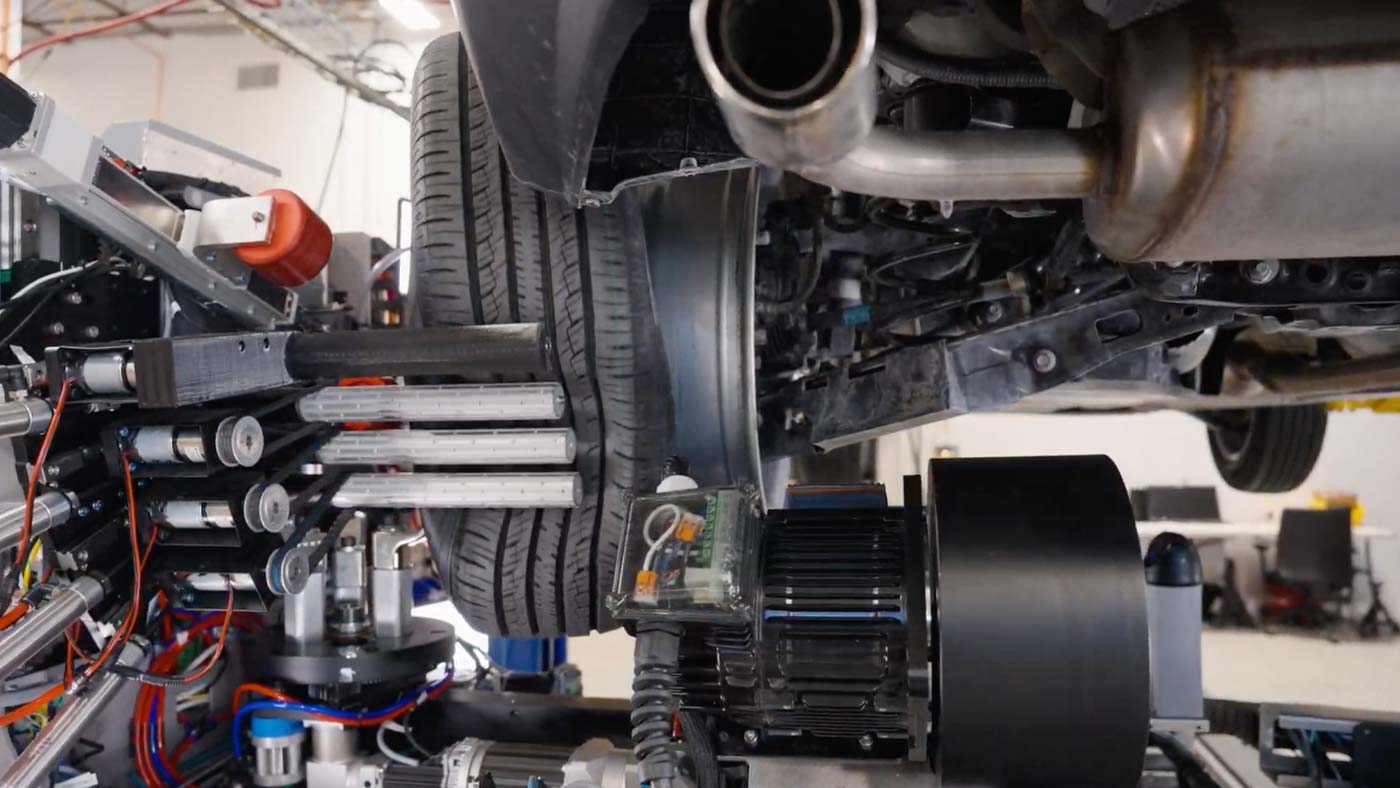
Automated Tire, Inc. emerged from stealth in May 2026 with SmartBay, a robotic service-bay platform designed to carry out tyre changes, wheel balancing and vehicle inspections. The company says the system uses robotics, computer vision and machine learning, and can fit inside a standard 12-foot bay. It also claims one technician can manage up to three bays, cutting a full tyre service to as little as 30 minutes.
Andy Chalofsky, chief executive of Automated Tire, Inc., described SmartBay as “the next generation of the automotive service bay”, positioning it as a way to automate routine and physically demanding workshop tasks.
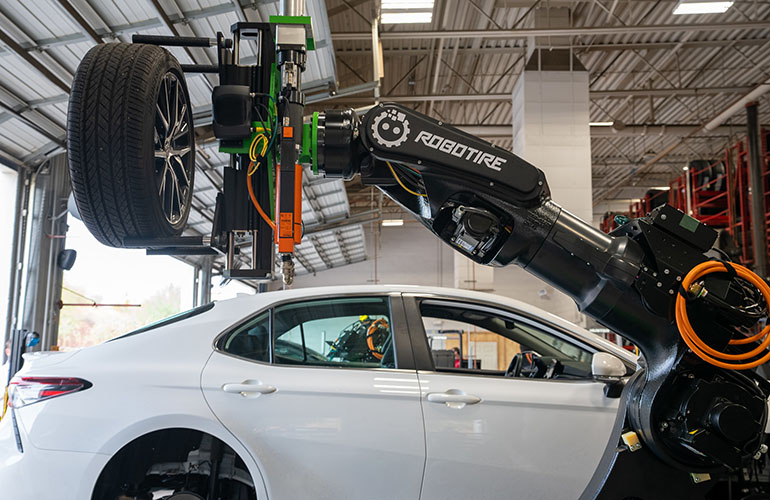
RoboTire has been developing a more focused robotic tyre-changing system for several years. Tire Review reported in 2023 that RoboTire’s system could change a set of four tyres in around 20 minutes, with robotic arms taking on the heavy lifting while technicians supervise the process.
The appeal for tyre businesses is clear. Workshops face pressure to increase throughput while dealing with recruitment challenges and rising service demand. Axios reported that tyre service demand is being lifted partly by electric vehicles, which can require more frequent tyre replacement, while shops continue to struggle to hire technicians.
That context matters for UK tyre retail. Tyre News has previously reported on EV tyre wear and customer education challenges, including research showing that EV drivers want better information when choosing replacement tyres. It has also covered growing use of AI and connected data in tyre-related service models, including Auto3iii’s AI-powered diagnostics and predictive maintenance platform.
In practice, robotic tyre changers are most likely to appeal first to high-volume dealerships, large tyre retail chains and fleet service centres. These businesses are better placed to justify the investment, adapt bay workflows and train staff to supervise automated equipment.
SmartBay is pitched as a broader service-bay system. Automated Tire says it can inspect vehicles, change tyres and balance wheels, with software that adapts to different vehicles rather than relying only on fixed routines.
RoboTire’s approach is narrower but still significant. Its system focuses on removing and refitting wheels using robotic arms, machine vision and integrated workshop processes. That makes it less of a full-bay reinvention and more of a practical step towards automation.
For employers, the strongest case is not only speed. Automation could reduce repetitive lifting, lower the risk of strain injuries and create more consistent process control. It could also support a more data-led customer experience, especially where inspection reports and service records are generated during the fitting process.
Robots do not remove the need for skilled staff. Real workshops deal with corroded fixings, damaged wheels, non-standard fitments, customer questions, TPMS issues, safety checks and exceptions that do not fit a predictable process.
That means tyre fitters are more likely to see their work change than disappear. The future role may involve less heavy manual handling and more supervision, diagnosis, exception handling, quality control and customer communication. Workshops will also need people who can install, maintain, calibrate and troubleshoot automated systems.
This mirrors a wider shift in tyre technology. Tyre News has reported on connected TPMS systems for off-road applications and fleet monitoring, where data improves visibility but does not remove the need for skilled service interpretation.
For the tyre industry, the near-term future is selective automation rather than a universal robotic takeover. High-volume sites may adopt robotic changers where labour is scarce and bay utilisation is critical. Smaller independent garages are more likely to adopt lower-cost tools first, before moving towards full robotic systems.
So, will technology replace tyre fitters? Not completely. SmartBay, RoboTire and similar platforms point to a service model where machines take on more of the repetitive physical work, while technicians move into higher-value operational and customer-facing roles.
Tagged with: AI tyre changers, robotic tyre fitting, SmartBay, RoboTire, tyre retail automation, fast-fit workshops, EV tyre wear, tyre service bays, tyre technicians, workshop productivity, computer vision, tyre fitting technology
Editorial Standards & Disclaimer
Tyre News Media is an independent industry publication. Our reporting is based on information available at the time of publication, including company announcements, regulatory filings, official data, research and other sources considered reliable.
Articles may include independent analysis and editorial interpretation. Where appropriate, company statements and third-party claims are attributed to their source. Analysis, estimates and forward-looking observations should not be read as statements of established fact.
Tyre News Media takes reasonable steps to ensure accuracy but welcomes corrections, clarifications and responses from organisations or individuals covered in our reporting. If you believe information is inaccurate or requires clarification, please contact info@tyrenews.co.uk. Material errors will be corrected as appropriate.
Commercial relationships, advertising and sponsorship do not determine Tyre News Media's editorial coverage or conclusions.


_0%20(1).png)













.png)
%20(1).jpg)
.jpeg)
.png)

%20(1).jpeg)
%20(1).jpeg)