


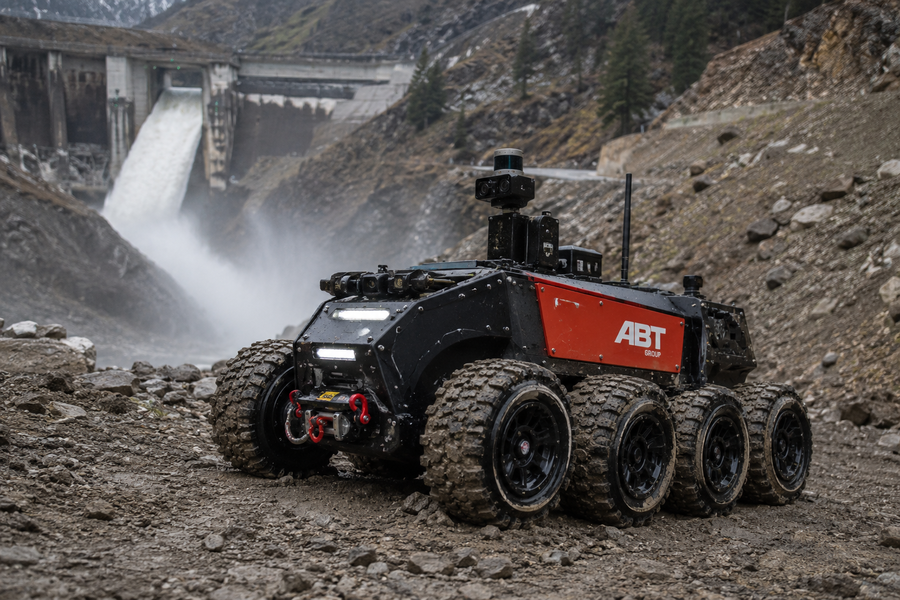

Pirelli and Abet Group have agreed to develop tyre, sensing and artificial intelligence technologies for remote-controlled electric ground vehicles used in rescue operations and extreme environments. The partnership takes Pirelli’s Cyber Tyre beyond its established premium automotive applications and into unmanned vehicles where grip data, remote control and tyre reliability can become operationally critical.
Pirelli’s latest Cyber Tyre partnership points to a potentially important expansion of the technology beyond conventional road vehicles.
The Italian tyre manufacturer will work with Abet High Tech Solutions on electric unmanned ground vehicles, or UGVs, intended to operate in difficult environments where sending people may be dangerous or impractical. Potential applications identified by Abet include disaster response, fires, polluted or radioactive locations and military logistics.
For Pirelli, the significance lies not simply in supplying a specialist tyre. The project places the tyre inside the vehicle’s sensing and control architecture, using information from the contact patch alongside optical sensors, cameras and other vehicle data to improve the way a remotely operated machine responds to changing terrain.
That is a markedly different test of connected tyre technology from the premium passenger-car applications in which Cyber Tyre has so far gained most attention.
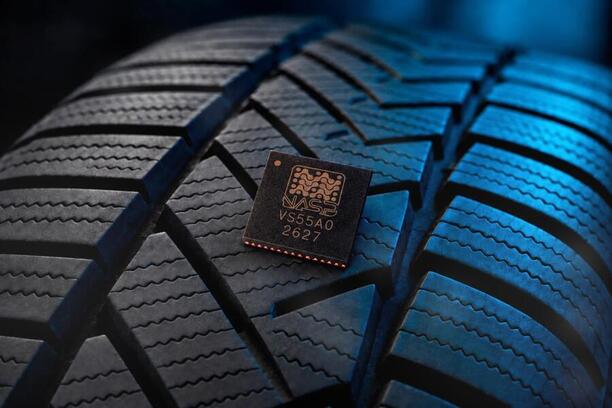
Cyber Tyre uses sensors within the tyre to collect information that can be processed through Pirelli software and communicated to vehicle electronics in real time. Pirelli has increasingly been building partnerships around that data layer rather than treating the technology as a standalone tyre feature.
Tyre News Media recently reported on Pirelli's investment in RIDEsense to expand Cyber Tyre software, combining physical tyre sensing with virtual sensor technology. Pirelli has also taken a 30% stake in Swedish AI company Univrses, as covered in its move to add computer vision to the Cyber Tyre ecosystem.
The Abet agreement pushes that strategy into another operating environment. Pirelli says optical sensors will complement Cyber Tyre information, allowing data to be transmitted to the vehicle in real time to help maximise grip under different conditions and improve remote vehicle control.
The companies also plan to develop AI and machine-learning models capable of combining information generated by Cyber Tyre with vehicle sensors and cameras. The objective is to create predictive models and additional onboard functions rather than simply display tyre-condition information to an operator.
This matters particularly for unmanned vehicles. A driver normally provides an additional layer of perception, feeling changes in traction and vehicle behaviour before or alongside electronic intervention. A remotely controlled vehicle cannot rely on that direct physical feedback. Reliable information about the tyre-road interface therefore has greater potential value as an input into control systems.
The project also includes development of a dedicated Pirelli tyre using the manufacturer's proprietary Run Forward technologies.
That work will be aimed at allowing the vehicle to continue operating and adapt across demanding surfaces. In rescue applications, where immobilisation could interrupt an operation or leave equipment stranded in an unsafe area, tyre durability and mobility after damage can carry a different commercial and operational value from conventional road-vehicle requirements.
The programme could therefore provide Pirelli with a demanding development environment for both connected and structural tyre technologies.
Andrea Casaluci, Pirelli chief executive, said the company sees extreme-condition rescue vehicles as an interesting market segment and believes Cyber Tyre can improve the precision and reliability of vehicles operating in such environments.
The agreement follows a series of Cyber Tyre projects involving Bosch, Movyon, Italy's Apulia region, Univrses and RIDEsense. Pirelli's 2025 annual report described its Bosch development agreement as particularly important to scaling Cyber Tyre, with the longer-term objective of embedding tyre-derived information into vehicle control systems rather than requiring individual integration projects with each manufacturer.
The Abet project suggests the same principle may have applications well outside premium cars.
The immediate addressable market for rescue UGV tyres is considerably smaller than the global passenger-car market. Its strategic value may be different.
Extreme-environment vehicles provide a setting in which traction intelligence, predictive sensing and continued mobility can have unusually high value. Successful deployment could demonstrate that connected tyres have a role in autonomous and remotely operated machinery where the tyre becomes part of the machine's perception system.
That could ultimately have relevance beyond emergency response. Mining, industrial sites, hazardous-material handling and other off-highway operations increasingly use remote or autonomous equipment, creating potential applications for tyres capable of supplying real-time information about surface conditions and vehicle behaviour.
The partnership therefore adds another piece to a wider industry shift towards software-defined tyre technology. Pirelli is pursuing physical sensors, virtual sensing, computer vision and vehicle-system integration, while competing approaches are also emerging. Tyre News Media has reported, for example, on Michelin's universal tyre digital twin, which takes a software-led approach to estimating tyre condition and grip.
The commercial question is increasingly not whether tyres can generate or infer useful data, but where that information delivers enough operational value to justify integration into the wider vehicle system.
Remote-controlled rescue vehicles could provide one of the clearest tests of that proposition.
The agreement also carries a regulatory dimension. Pirelli and Abet HTS intend to notify Italy's Golden Power office under Legislative Decree 21/2012 because the planned activities are considered strategically significant. That step underlines the sensitivity surrounding technologies combining connected vehicles, artificial intelligence and applications that may extend into defence or critical operations.
For Pirelli, the programme remains a development project rather than evidence of a new volume tyre business. But it broadens the commercial territory being explored for Cyber Tyre. If the technology can provide actionable grip and terrain information to machines operating without a driver physically onboard, the tyre's future role may extend considerably beyond monitoring its own condition.
Authoritative external reference: Pirelli Cyber Tyre technology overview.
Tags: Pirelli Cyber Tyre, Abet Group, unmanned ground vehicles, rescue vehicles, smart tyres, connected tyres, tyre sensors, artificial intelligence, remote vehicles, OTR tyres, autonomous vehicles
Editorial Standards & Disclaimer
Tyre News Media is an independent industry publication. Our reporting is based on information available at the time of publication, including company announcements, regulatory filings, official data, research and other sources considered reliable.
Articles may include independent analysis and editorial interpretation. Where appropriate, company statements and third-party claims are attributed to their source. Analysis, estimates and forward-looking observations should not be read as statements of established fact.
Tyre News Media takes reasonable steps to ensure accuracy but welcomes corrections, clarifications and responses from organisations or individuals covered in our reporting. If you believe information is inaccurate or requires clarification, please contact info@tyrenews.co.uk. Material errors will be corrected as appropriate.
Commercial relationships, advertising and sponsorship do not determine Tyre News Media's editorial coverage or conclusions.


















%20(1).jpeg)