
Britain’s rapidly expanding used EV market is beginning to change the workload facing independent tyre retailers and workshops. Battery electric vehicle transactions rose by almost a third in early 2026, while three-to-five-year-old EVs are selling particularly quickly. As that first significant generation of electric cars ages, tyre specification, alignment, suspension and technician competence are becoming increasingly important aftermarket issues.
The UK electric vehicle transition is entering a phase with important consequences for the tyre aftermarket. Until recently, much of the industry discussion centred on new EV registrations, original equipment fitments and whether motorists could be persuaded to switch powertrains. Increasingly, the question for independent businesses is what happens when those vehicles reach their second and third owners.
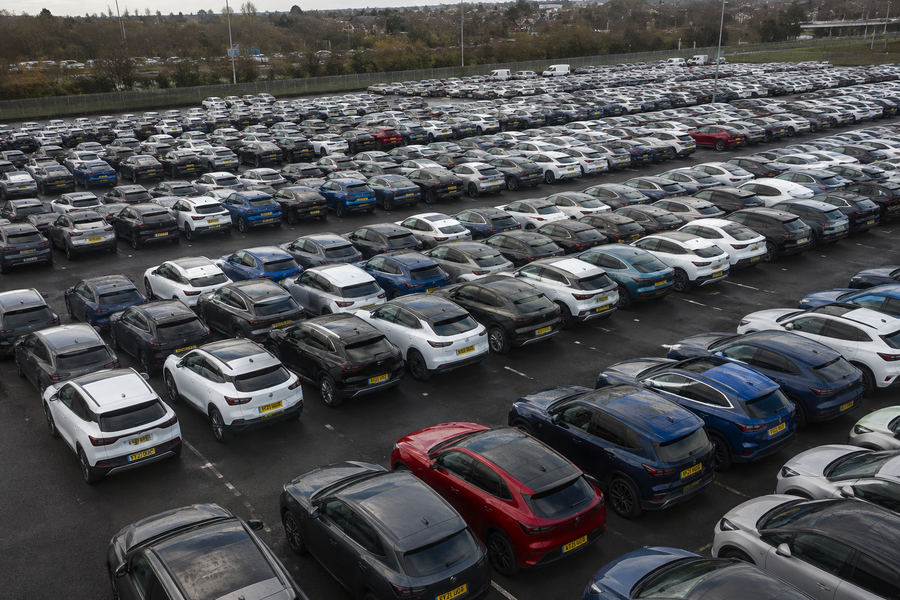
That process is accelerating. Society of Motor Manufacturers and Traders figures show 86,943 used battery electric vehicles changed hands during the first quarter of 2026, up 32% year on year, taking BEVs to a record 4.3% share of used-car transactions. Auto Trader's June data provides another important signal: three-to-five-year-old EVs were selling in an average of 21 days, compared with 30 days across the wider used market, and accounted for almost half of used EV enquiries.
For tyre businesses, that age profile arguably matters as much as the headline growth rate. Cars registered during the earlier expansion of the UK EV market are moving deeper into the replacement cycle, where owners are less likely to rely exclusively on franchised dealers. Tyres, wheel alignment, brakes and suspension are therefore becoming important points of contact between EV drivers and the independent aftermarket.
Electrification changes the servicing equation without eliminating it. Battery electric cars remove a substantial number of conventional engine and transmission service requirements, but their tyres still wear, suspension geometry still moves and mechanical brakes still require inspection. Higher vehicle mass on many EV models and high torque availability can also place different demands on tyres and chassis components.
Tyre specification is consequently more important than simply identifying the correct nominal size. Load index, speed rating and, where specified, XL or high-load construction must be checked against vehicle manufacturer requirements. Rolling resistance, noise and load capacity are also increasingly prominent considerations, as reflected in the tyre industry's growing portfolio of products developed for, or compatible with, electric vehicles.
Tyre News Media has already tracked this change at product level. Continental's growing EV original-equipment presence illustrates how load capacity, rolling resistance and noise have become important development criteria, while Michelin's latest energy-focused replacement tyres show how efficiency requirements are increasingly influencing products intended for both electric and combustion vehicles.
The commercial implication is that retailers need reliable vehicle-specific fitment information rather than a blanket rule that every electric vehicle needs an "EV tyre". Some manufacturers develop dedicated EV ranges, while others engineer conventional product families to cover several powertrains. The critical requirement at replacement is that the tyre meets the vehicle manufacturer's specification and the operating requirements of the vehicle.
This distinction becomes particularly important as EVs become older and more price-sensitive. A second or third owner may be more inclined to shop across brands and price points than the original purchaser. Retailers therefore have an opportunity to explain why apparently similar tyres can differ in load capability, rolling resistance, noise, mileage performance and price without turning EV tyre replacement into an unnecessarily complicated sales proposition.
The ageing EV parc also strengthens the case for alignment and chassis inspection alongside tyre replacement.
Uneven tyre wear is already expensive on vehicles using larger-diameter or premium tyres. On an EV, poor geometry can additionally work against the efficiency that manufacturers have spent considerable engineering effort trying to achieve through low rolling resistance, aerodynamics and powertrain optimisation.
That makes tyre wear patterns useful diagnostic evidence. Inner or outer shoulder wear, feathering and substantial differences across an axle should prompt an examination of inflation, alignment and potentially suspension condition rather than an automatic like-for-like tyre change.
The opportunity is not to sell alignment simply because a vehicle is electric. It is to make measurement part of a defensible service process, particularly where wear patterns, impact damage or suspension work justify it. Workshops able to measure geometry accurately and explain the results can potentially turn tyre replacement from a largely transactional job into a broader chassis service.
There is also an increasingly important relationship with advanced driver assistance systems. Alignment and suspension businesses need procedures for identifying when work affects sensors or vehicle geometry relevant to ADAS and when calibration is required. That raises the competence and equipment threshold for businesses wanting to capture more of the EV-era chassis market.
Regenerative braking creates another counter-intuitive maintenance issue. Reduced reliance on friction brakes can mean discs and other mechanical brake components see less regular use, making corrosion and deterioration an inspection consideration even on relatively low-mileage electric cars.
For tyre and chassis specialists, the important point is not to expand casually into high-voltage repair. It is to recognise that an EV arriving for tyres may warrant a broader visual assessment of safety-critical mechanical components within the workshop's competence.
The same principle applies underneath the vehicle. Evidence of impact around battery protection structures, damaged high-voltage components, warning messages or suspected coolant leaks should trigger an appropriate referral rather than diagnosis by technicians without the necessary EV competence.
That boundary is commercially important. An "EV-ready" independent does not need to become a battery repair centre, but it does need to know what its technicians can safely inspect, what they should not touch and where a vehicle should be referred when a problem falls outside their competence.
The expanding used market makes technician capability one of the clearest constraints on the opportunity. The Institute of the Motor Industry reported in May that 74,734 UK technicians held an EV qualification at the end of Q4 2025, around 35% of the technician workforce. Its modelling indicates that demand for EV-qualified technicians could exceed supply by more than 43,000 people by 2035 if training does not accelerate.
For tyre businesses, the relevant training requirement is not necessarily deep battery diagnosis. Frontline staff need competence appropriate to the work they perform and sufficient awareness to recognise high-voltage risks, lift vehicles correctly and understand when conventional tyre, brake or suspension procedures intersect with EV-specific safety requirements.
The tyre sector has already begun building that capability. In 2025, Tyre News Media reported the launch of Autotech Training's NTDA-certified Licensed Electric Vehicle Tyre Technician programme, aimed specifically at technicians servicing electric and hybrid vehicles.
That development points to a wider change in what constitutes a tyre specialist. Fitment knowledge increasingly sits alongside alignment capability, vehicle electronics awareness, ADAS considerations and an understanding of electrified vehicle safety.
Not every independent workshop needs every piece of EV diagnostic equipment. The more immediate investment question is whether a business has the equipment and competence required for the work it intends to sell.
For a tyre-led operation, that could mean reviewing vehicle lifting capability, fitment data, alignment equipment and technician training before investing in sophisticated high-voltage diagnostics. Businesses carrying out suspension and geometry work may have a stronger case for adding ADAS capability or establishing a calibration partnership. In both cases, documented referral arrangements can be as important as attempting to bring every service in-house.
The key commercial development is that EV aftermarket demand is becoming less theoretical. The rapid turnover of three-to-five-year-old electric cars indicates that a meaningful population is entering the ownership stage in which independent servicing becomes increasingly relevant. Auto Trader reported in July that prices of three-to-five-year-old used EVs had risen 8.9% year on year in June, while vehicles in that category continued to sell in just 21 days.
That does not automatically mean EVs will generate more aftermarket revenue than combustion cars. They remove some established service categories and introduce others, while requirements vary considerably by model, mileage and use. What it does mean is that tyre, alignment and chassis businesses are positioned around some of the components that remain fundamentally serviceable regardless of powertrain.
The first large wave of used electric cars is therefore a test of aftermarket readiness as much as consumer acceptance. Businesses that can identify the correct tyre, interpret abnormal wear, measure alignment accurately and recognise the limits of their EV competence have a credible route to retaining customers as the vehicle parc changes.
The EV aftermarket is no longer waiting for the future fleet to arrive. Increasingly, it is arriving at the tyre bay.
Tags: used EV tyres, EV tyre replacement, electric vehicle servicing, tyre retailers, wheel alignment, EV suspension, EV aftermarket, used electric cars, EV technician training, EV tyre specification, independent workshops
Editorial Standards & Disclaimer
Tyre News Media is an independent industry publication. Our reporting is based on information available at the time of publication, including company announcements, regulatory filings, official data, research and other sources considered reliable.
Articles may include independent analysis and editorial interpretation. Where appropriate, company statements and third-party claims are attributed to their source. Analysis, estimates and forward-looking observations should not be read as statements of established fact.
Tyre News Media takes reasonable steps to ensure accuracy but welcomes corrections, clarifications and responses from organisations or individuals covered in our reporting. If you believe information is inaccurate or requires clarification, please contact info@tyrenews.co.uk. Material errors will be corrected as appropriate.
Commercial relationships, advertising and sponsorship do not determine Tyre News Media's editorial coverage or conclusions.
















%20(1).jpeg)