
Tyre manufacturers, distributors and retailers are facing renewed price pressure in 2026 as rubber, freight, energy and labour costs affect margins across the supply chain. The pressure is most visible in Asia and Europe, where higher input costs are testing the ability of brands and wholesalers to pass increases through to customers.
Natural rubber remains one of the main pressure points for tyre production. Market data shows rubber prices were still sharply higher year on year in late June 2026, despite shorter-term volatility. Trading Economics reported rubber at 210.80 US cents per kg on 26 June 2026, around 29.4% higher than a year earlier.
That movement matters because rubber, carbon black, synthetic rubber, steel and other inputs form a large share of tyre manufacturing costs. Tyre News has already reported on supplier-side pressure, including Lanxess increasing rubber additive prices by 15% to 50% in March 2026 as energy, raw material and supply chain costs rose.
Pirelli has been one of the clearest examples of manufacturers using price action to protect earnings. Reuters reported in April 2026 that the Italian premium tyre maker had activated a mitigation plan in response to Middle East-related disruption, including price increases and further cost-cutting.
The company also referred to raw material and shipping cost increases in its first-quarter 2026 investor materials, while noting that price increases had already been announced to the market.
That context shows why manufacturers are reluctant to absorb the full cost burden. However, the ability to pass increases through the chain depends on brand strength, product segment and local demand. Premium brands are better placed than lower-margin producers, particularly where fleet, original equipment and specialist segments value performance and availability over headline price.
The squeeze is sharper for distributors and tyre retailers. Wholesale prices can rise faster than retail prices, especially when drivers delay replacement or shop aggressively on price. Tyre News has previously highlighted the risk of tyre deferral in the SUV market, with customers delaying purchases while garages face higher parts and operating costs.
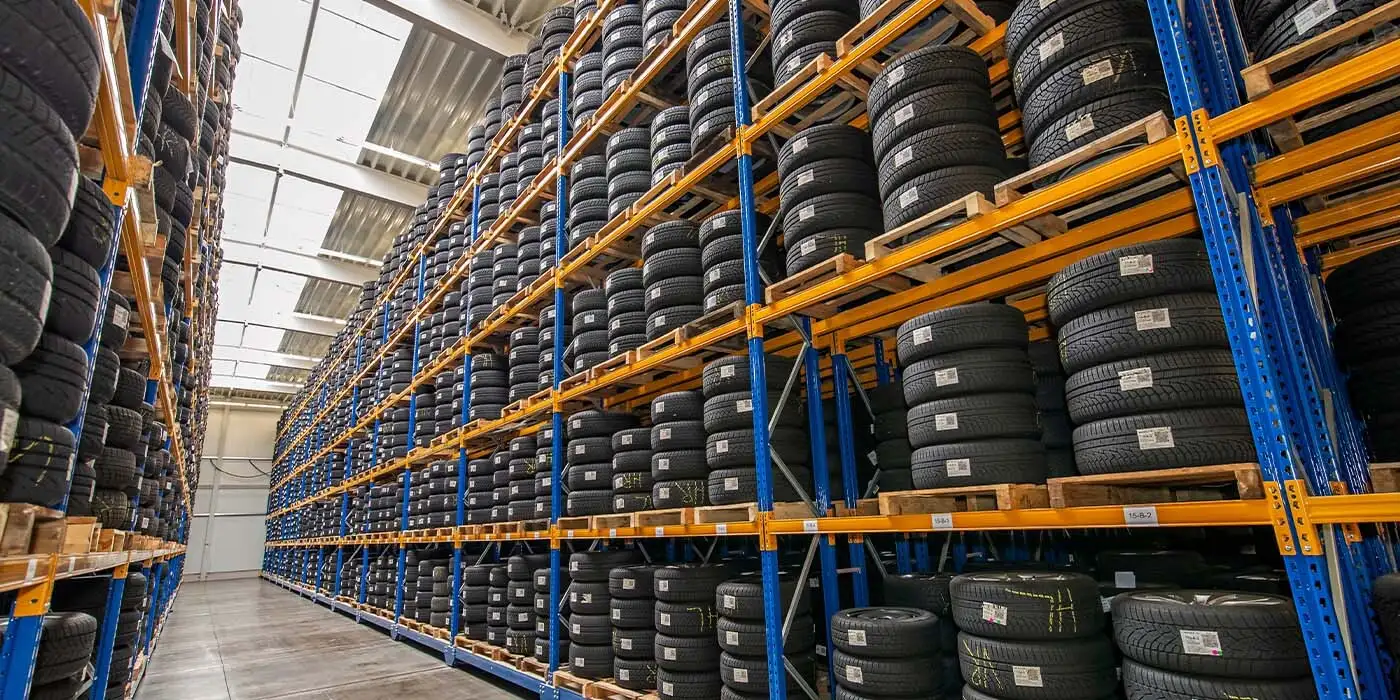
In practice, this creates a difficult trading position. Carrying too much stock can expose wholesalers to price corrections or weak sell-out. Carrying too little stock can leave retailers short when availability tightens. The result is a market where cash flow, stock discipline and supplier relationships become more important than volume alone.
The Chinese market is also a key reference point because of its scale in both tyre production and raw material demand. Tyre News recently covered tyre price increases in China, linking the pressure to higher natural rubber and synthetic rubber costs, as well as wider operating expenses.
Independent market commentary also points to tighter natural rubber supply in 2026, with Southeast Asian weather disruption and ageing plantations affecting availability. Procurement Resource reported a natural rubber benchmark of RMB 17,858 per tonne in early May and year-to-date gains above 15%.
For the UK and European tyre trade, the issue is not simply whether prices rise. The larger question is where margin can still be protected. Retailers may need to lean harder into fitting, inspection, maintenance, fleet checks and tyre safety advice, rather than competing only on unit price.
Electric vehicle tyres also remain an important margin opportunity. Higher vehicle weight, torque characteristics and lower-noise requirements create demand for more specialised products. That gives retailers a stronger service-led conversation than standard budget replacement sales.
The second half of 2026 is therefore likely to reward businesses with disciplined stock control, clear brand positioning and strong aftersales service. The weakest operators will be those caught between rising wholesale prices and customers unwilling to accept higher retail bills.
Tagged with: ttre prices, rubber prices, tyre manufacturing costs, tyre wholesale, tyre retail, natural rubber, synthetic rubber, carbon black, EV tyres, fleet tyres, tyre supply chain, tyre margins
Editorial Standards & Disclaimer
Tyre News Media is an independent industry publication. Our reporting is based on information available at the time of publication, including company announcements, regulatory filings, official data, research and other sources considered reliable.
Articles may include independent analysis and editorial interpretation. Where appropriate, company statements and third-party claims are attributed to their source. Analysis, estimates and forward-looking observations should not be read as statements of established fact.
Tyre News Media takes reasonable steps to ensure accuracy but welcomes corrections, clarifications and responses from organisations or individuals covered in our reporting. If you believe information is inaccurate or requires clarification, please contact info@tyrenews.co.uk. Material errors will be corrected as appropriate.
Commercial relationships, advertising and sponsorship do not determine Tyre News Media's editorial coverage or conclusions.
















%20(1).jpeg)
%20(1).png)